
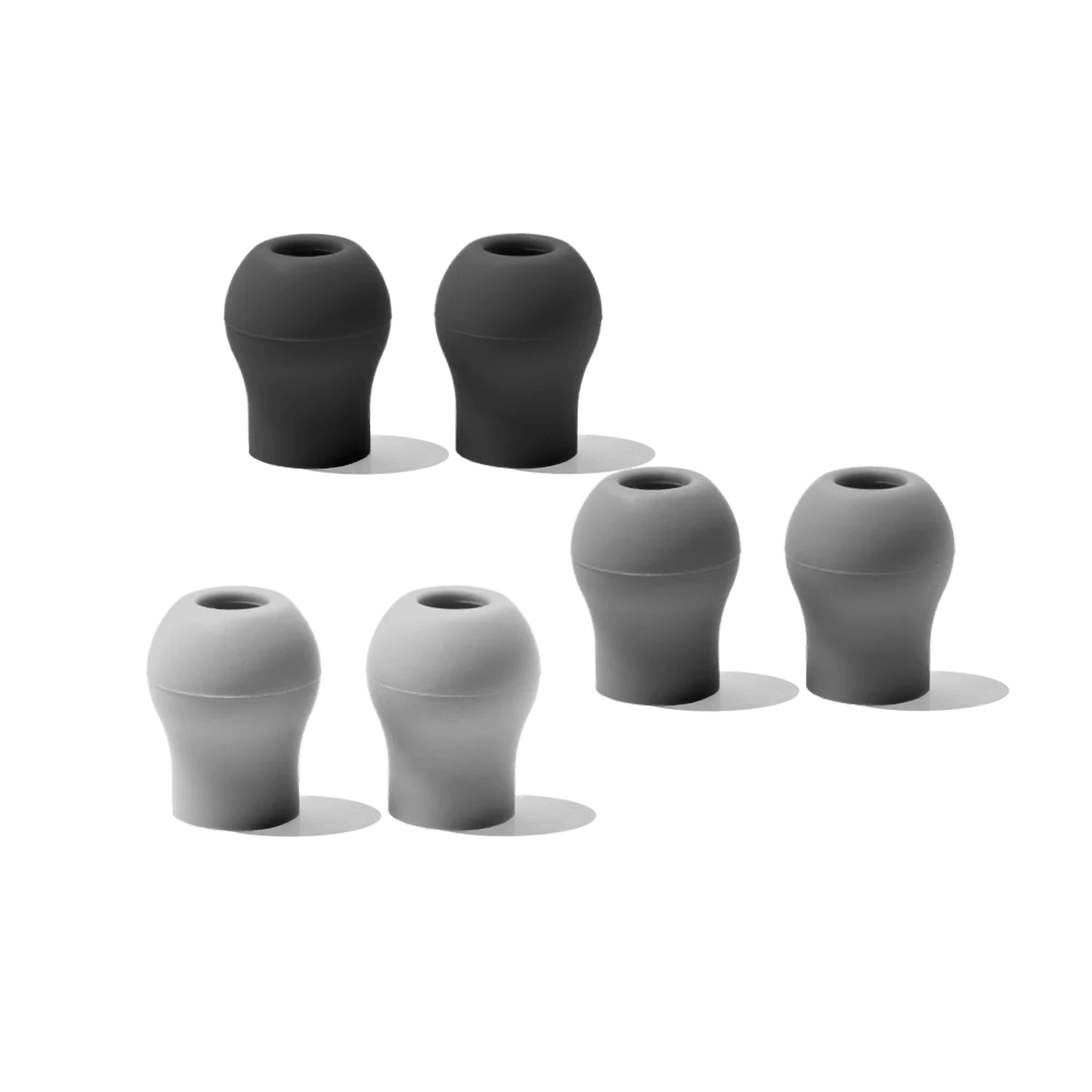
How might we redesign the Core500 stethoscope eartips to ensure a reliable, acoustic seal cross various ear anatomies while maintaining comfort and durability for long-term use?
Eko Health
Invention Corps of Berkeley Contract
Kayla Reid, Meghna Sharma, Sravya Bandla, Conor McSeveney, Erin Pan, Kevin Wong, Zoe Petty

Current State
Eko’s current stethoscope eartips have notable quality and functionality issues.
-
Over long periods of wear, users report specific sections that ache. The current design doesn’t accomodate multiple ear canal shapes and sizes.
-
The eartips detach too easily from the stethoscope stem, often caused by the addition/removal of the stethoscope to a doctor’s neck.
Mission
How might we redesign the Core500 stethoscope eartips to ensure a reliable, acoustic seal cross various ear anatomies while maintaining comfort and durability for long-term use?


Stage 1: Research
Project Phases
Checkpoint: CAD Critique
Stage 2: Ideation (Sketching, CAD)
Checkpoint: Acoustic Testing
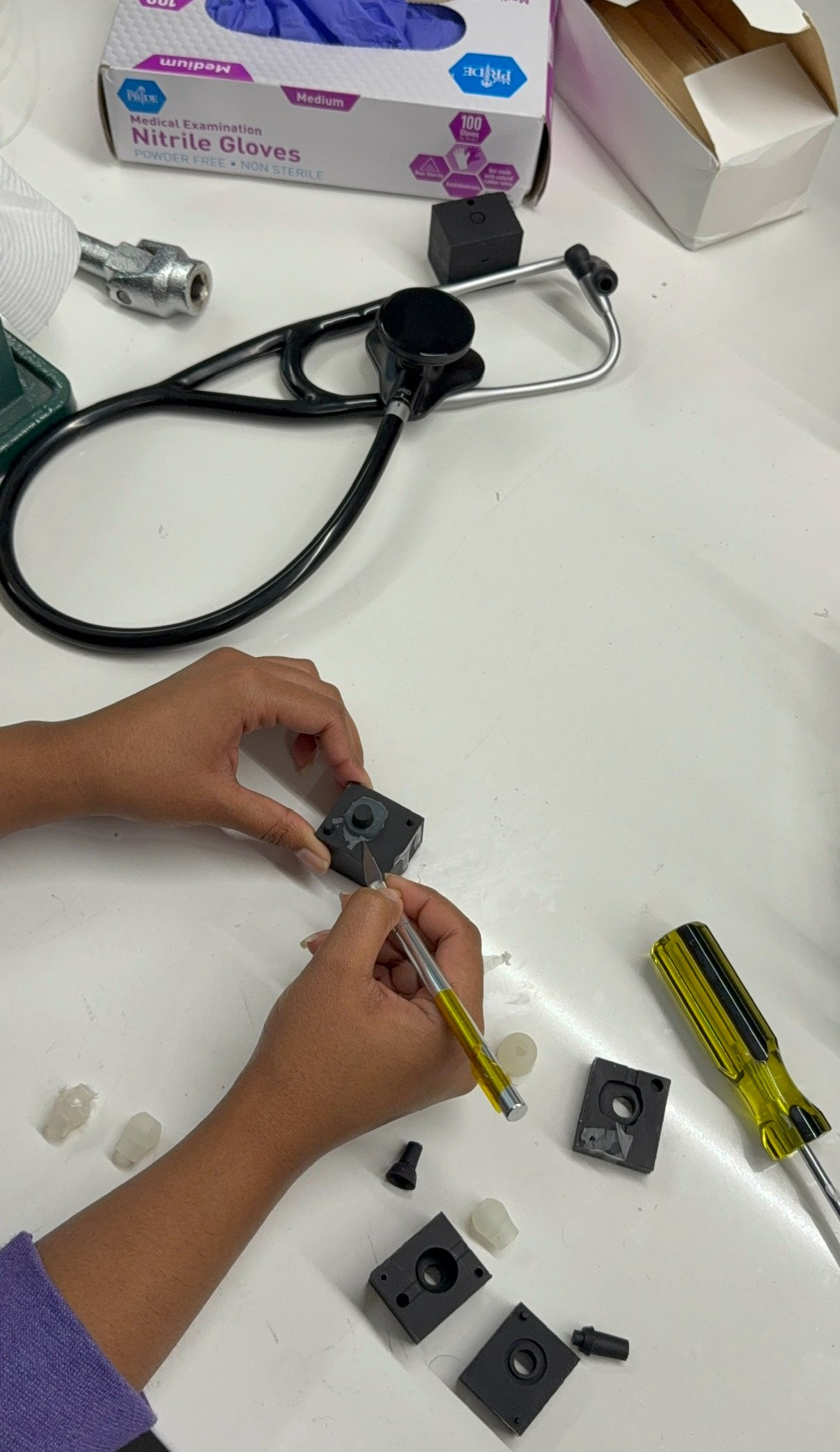
Stage 3: Rapid Prototyping (Injection Molding)
Final Deliverables

Stage 1: Research
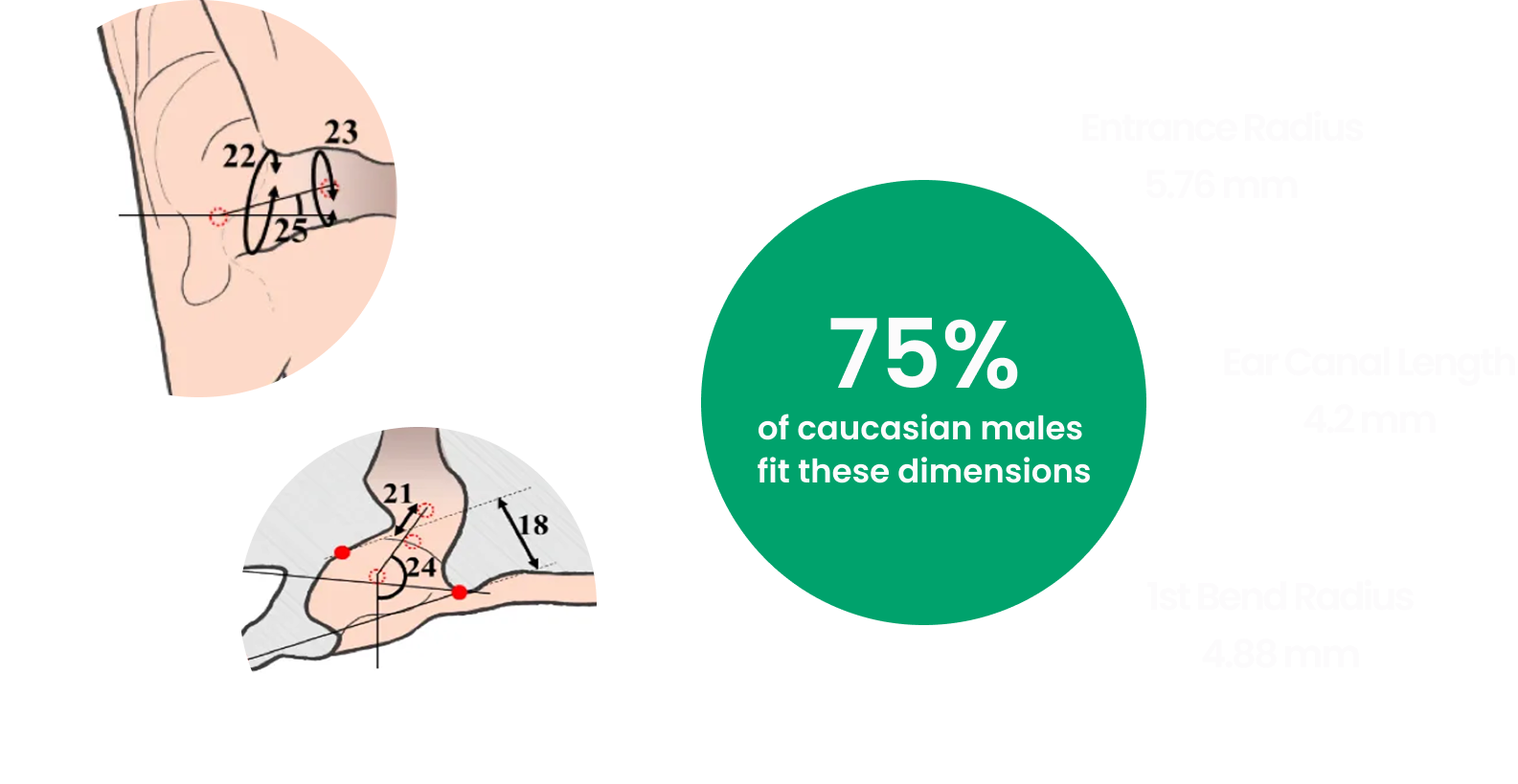
Competitive Analysis
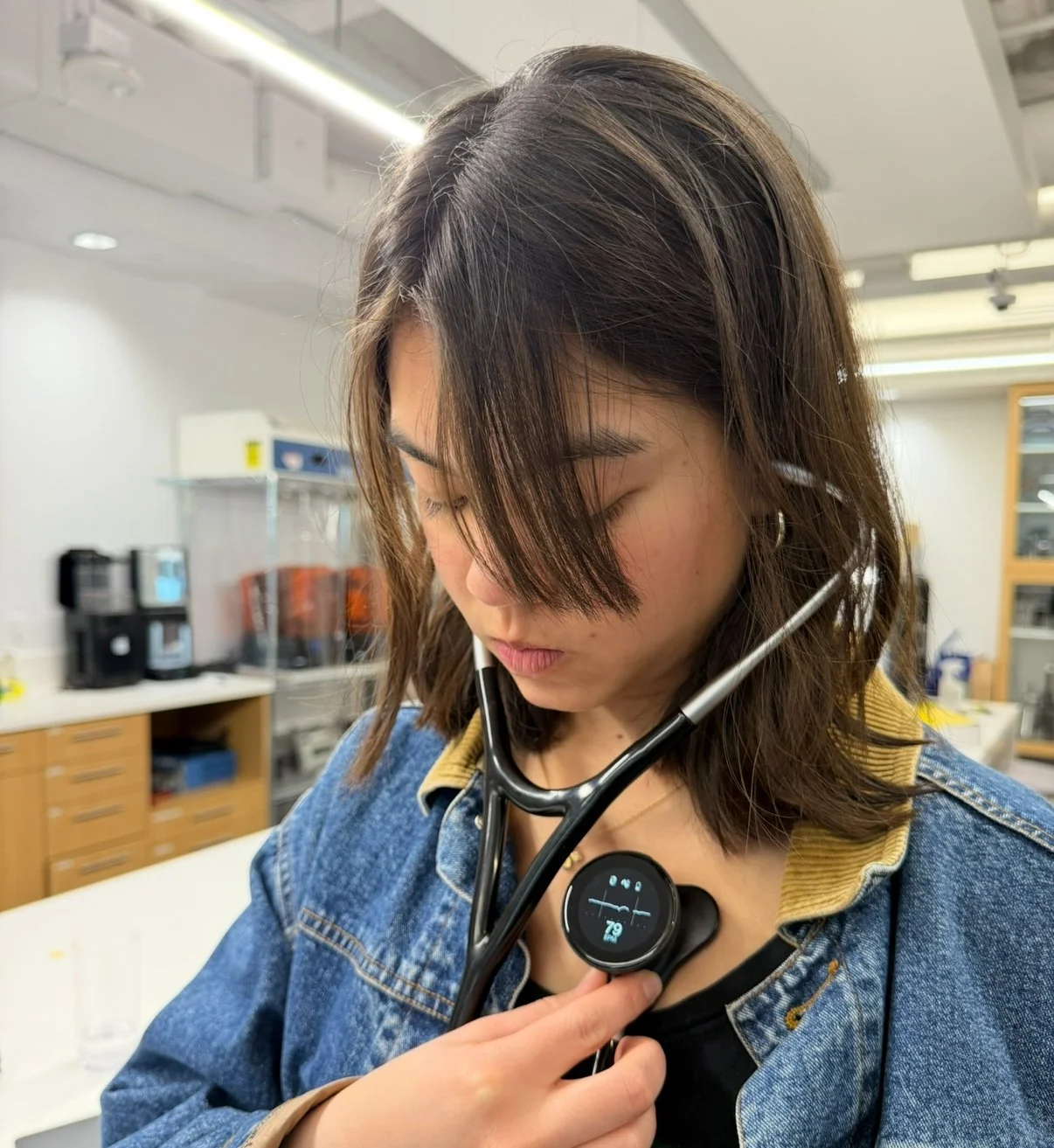
Internal Testing
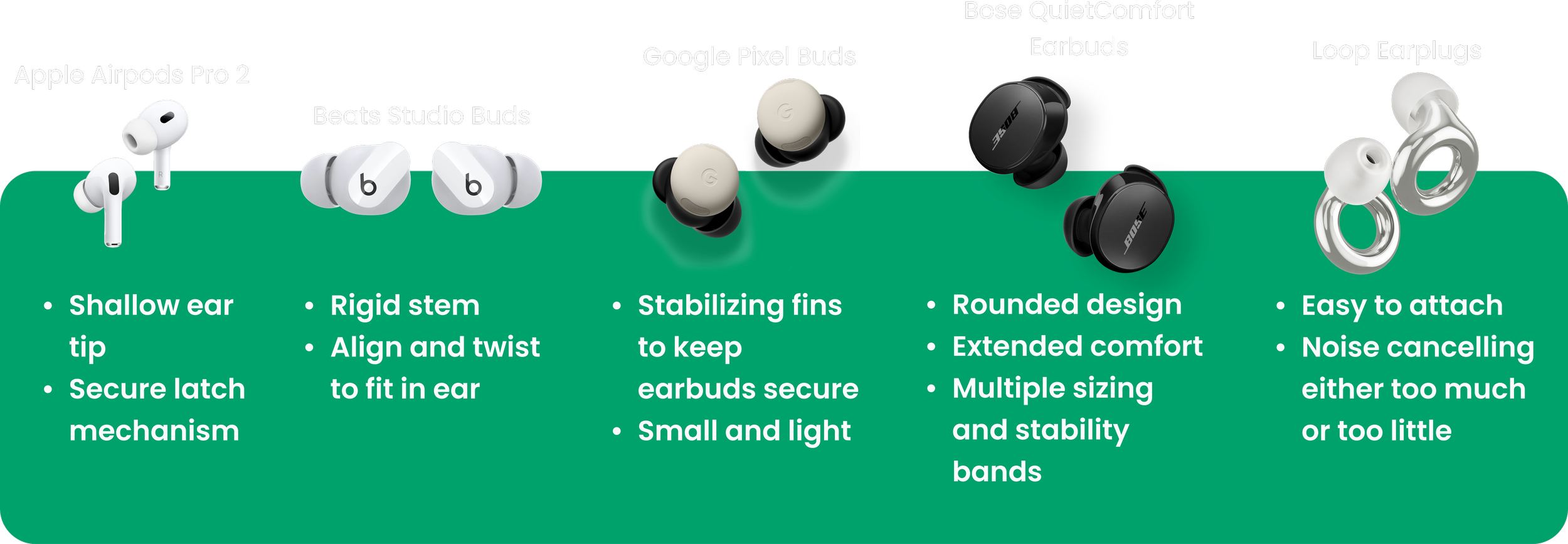

Anthropometry
Lee, Wonsup, et al. “Anthropometric Analysis of 3D Ear Scans of Koreans and Caucasians for Ear Product Design.” Ergonomics, vol. 61, no. 11, 2018, pp. 1480–1495. PubMed+2Taylor & Francis Online+2
Song, Haseung, Gee Won Shin, Yeree Yoon, and Sangwoo Bahn. “The Effects of Ear Dimensions and Product Attributes on the Wearing Comfort of Wireless Earphones.” Applied Sciences, vol. 10, no. 24, 2020, article 8890. ResearchGate
Japatti, Sharanbasappa R., Priyanka J. Engineer, Manjunatha Reddy B., Akash U. Tiwari, Chidambar Y. Siddegowda, and Reshma B. Hammannavar. “Anthropometric Assessment of the Normal Adult Human Ear.” Annals of Maxillofacial Surgery, vol. 8, no. 1, 2018, pp. 42–50.
Stage 2: Ideation
Individual and Team Sketching
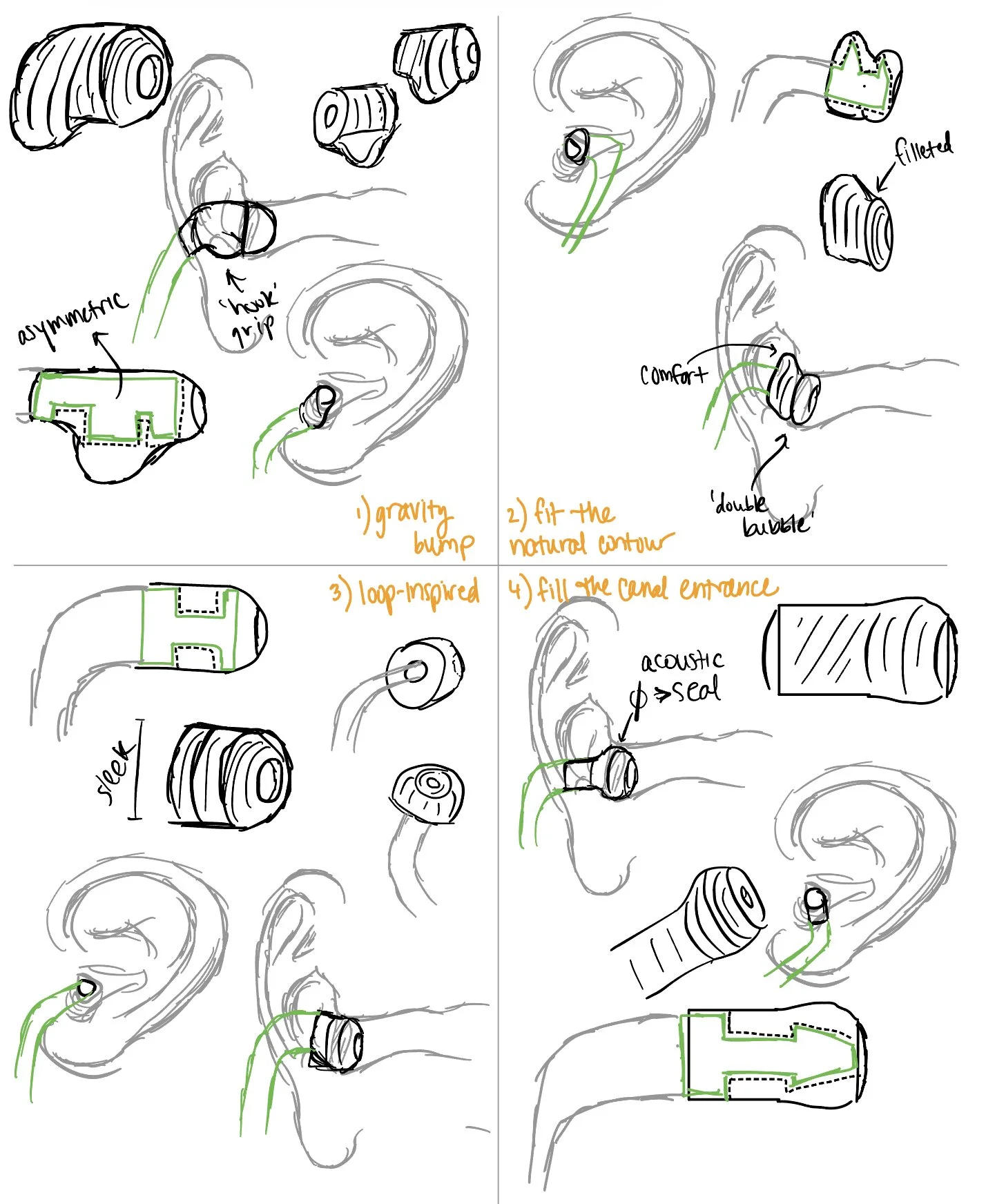
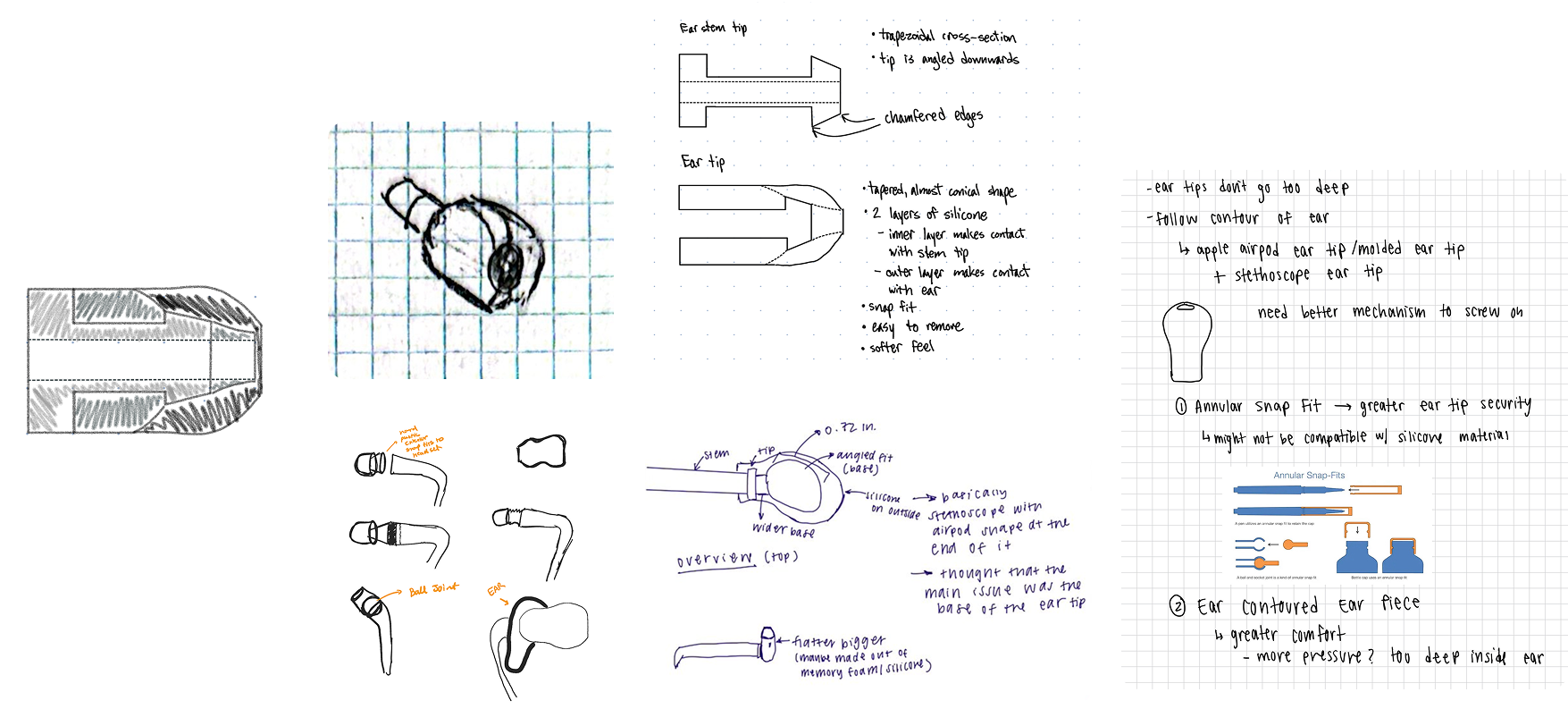
my initial 4 ideas
Team Designs: Iteration 1
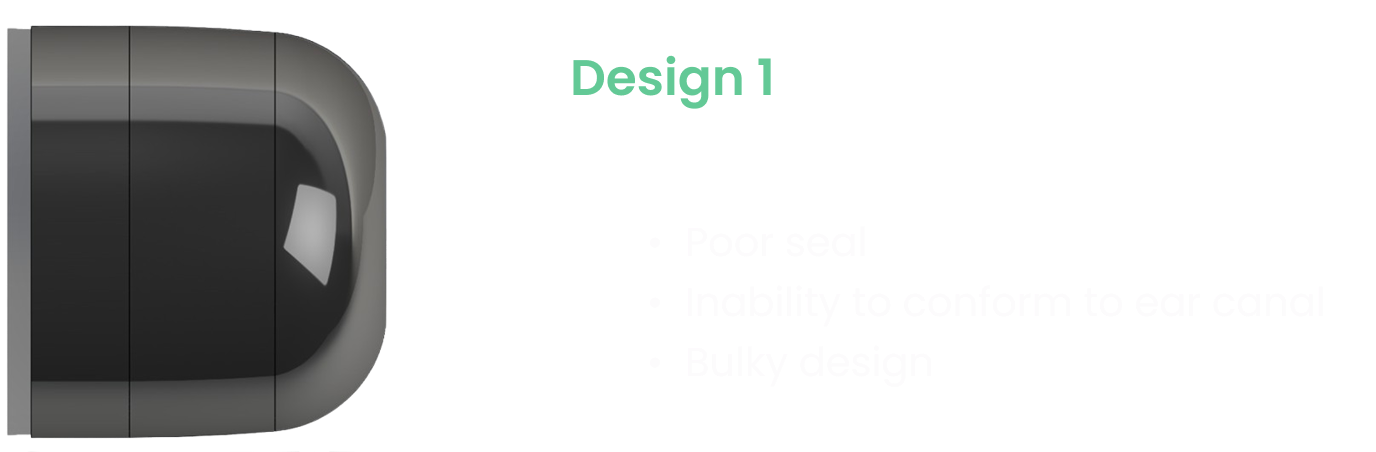
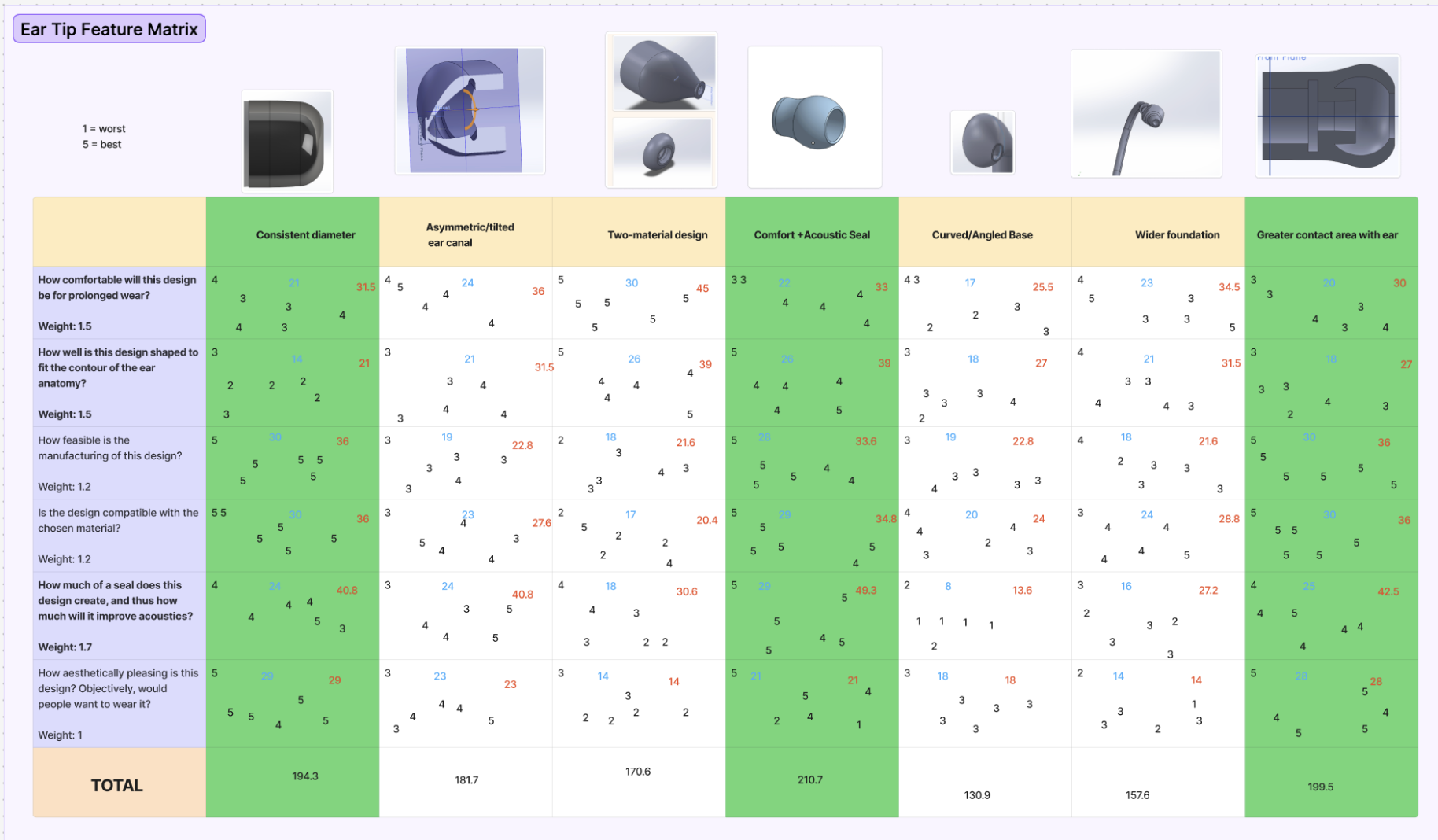
External Usability Testing & Internal Weighted Matrix
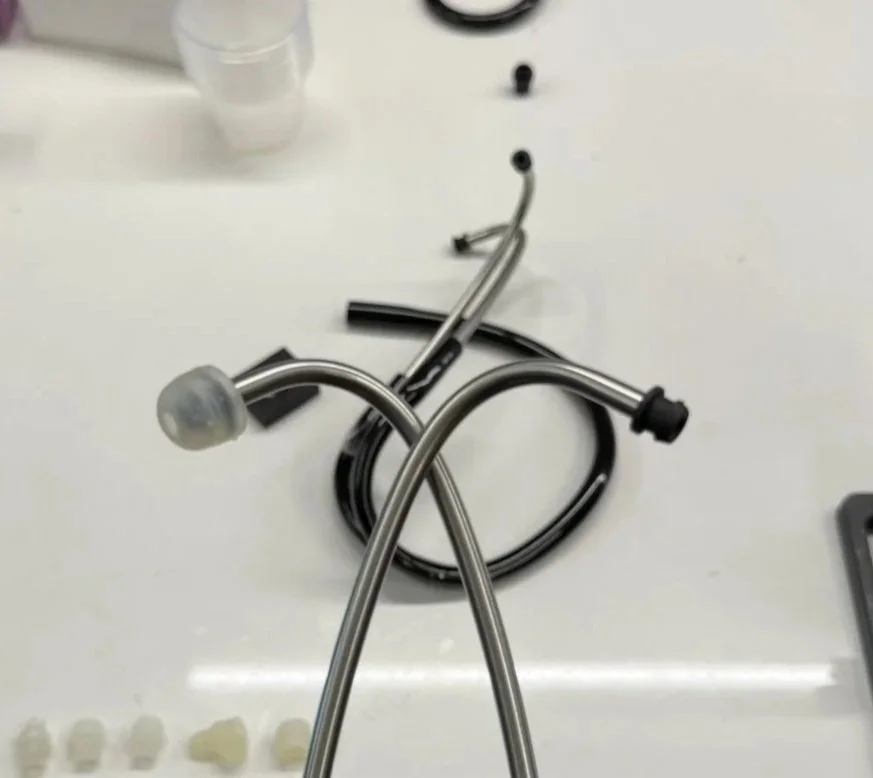
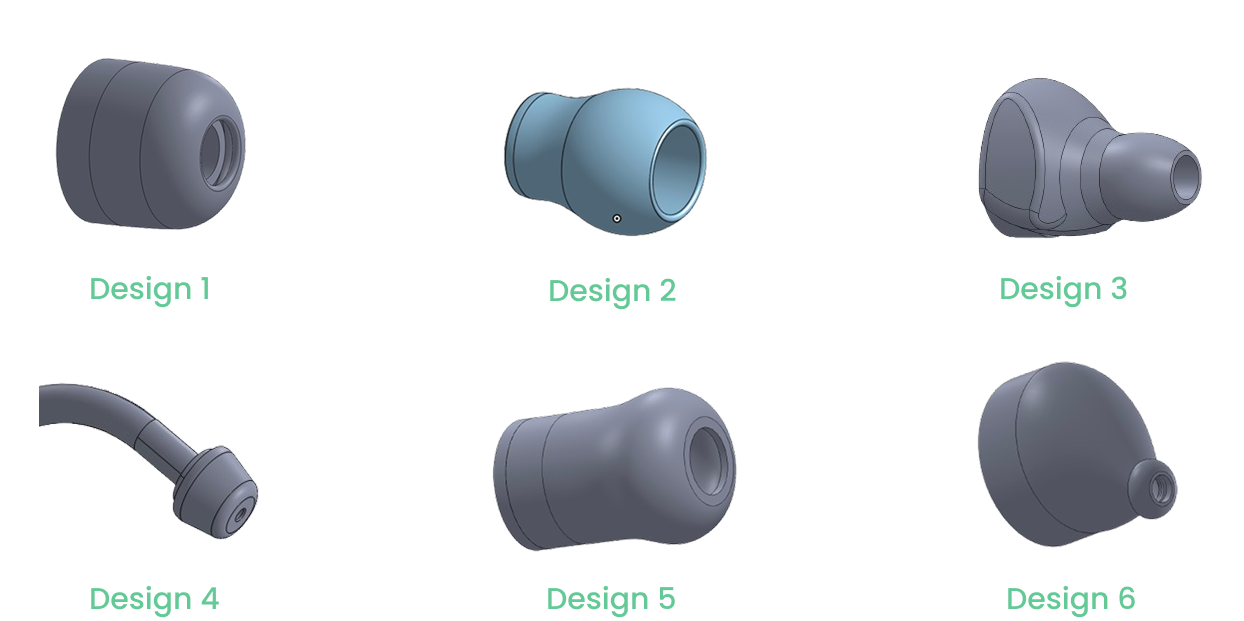
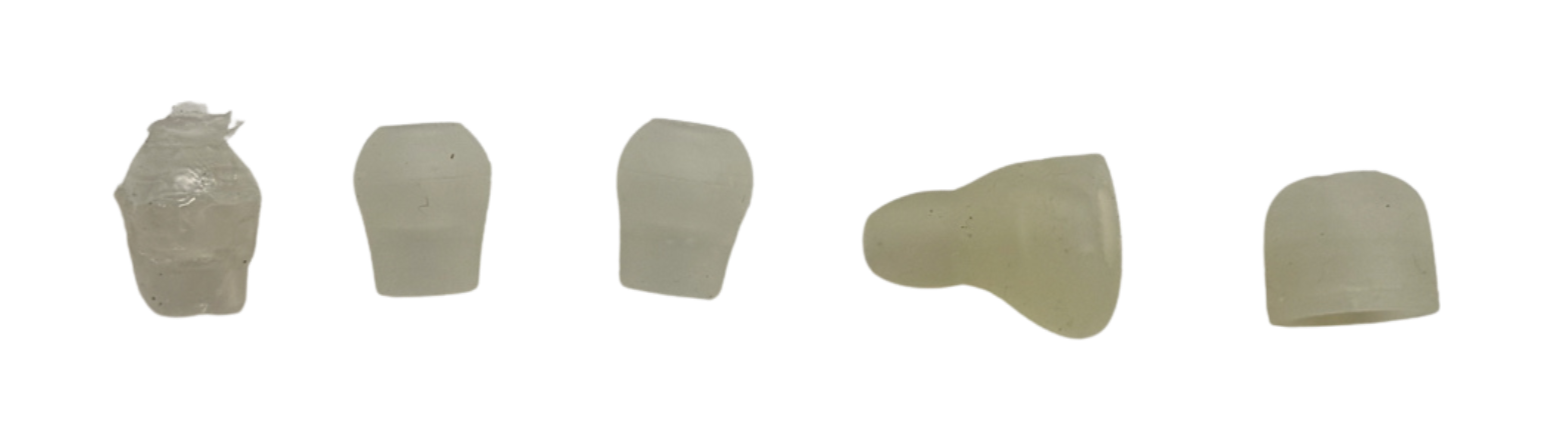
Testing: Rapid Prototyping
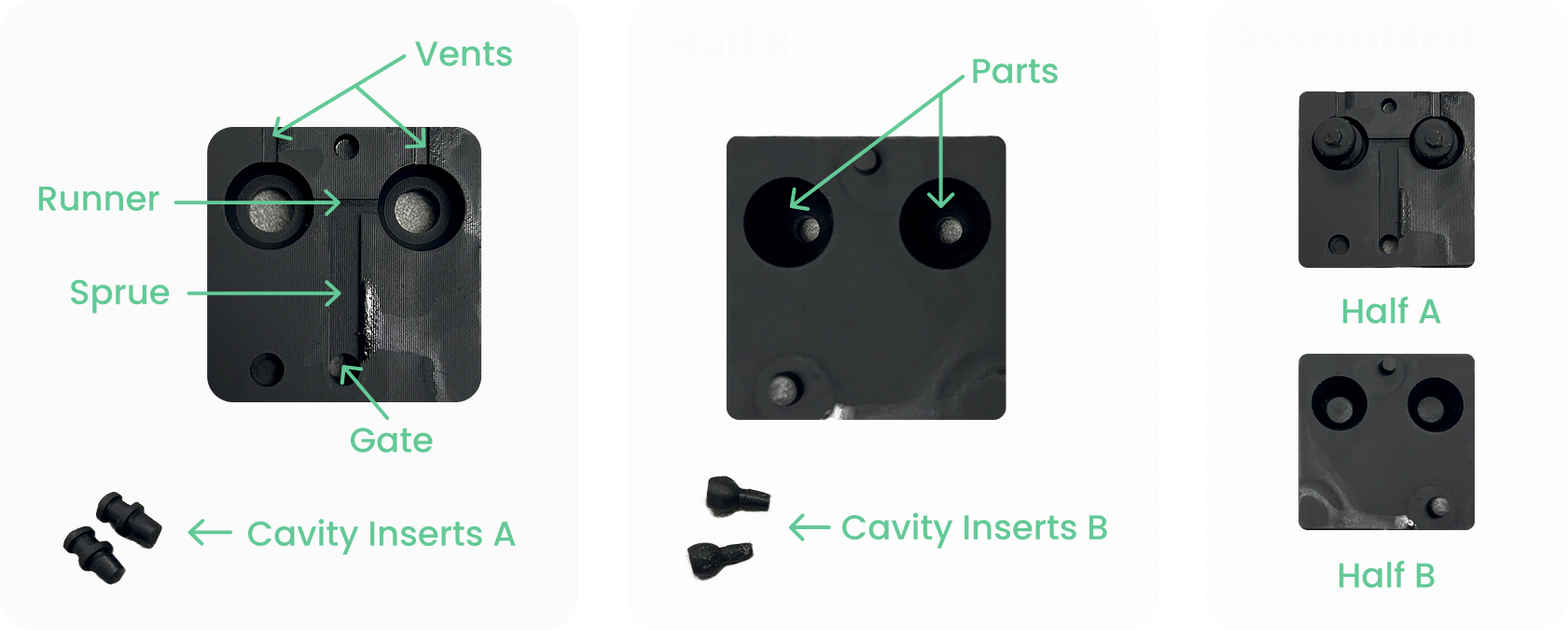
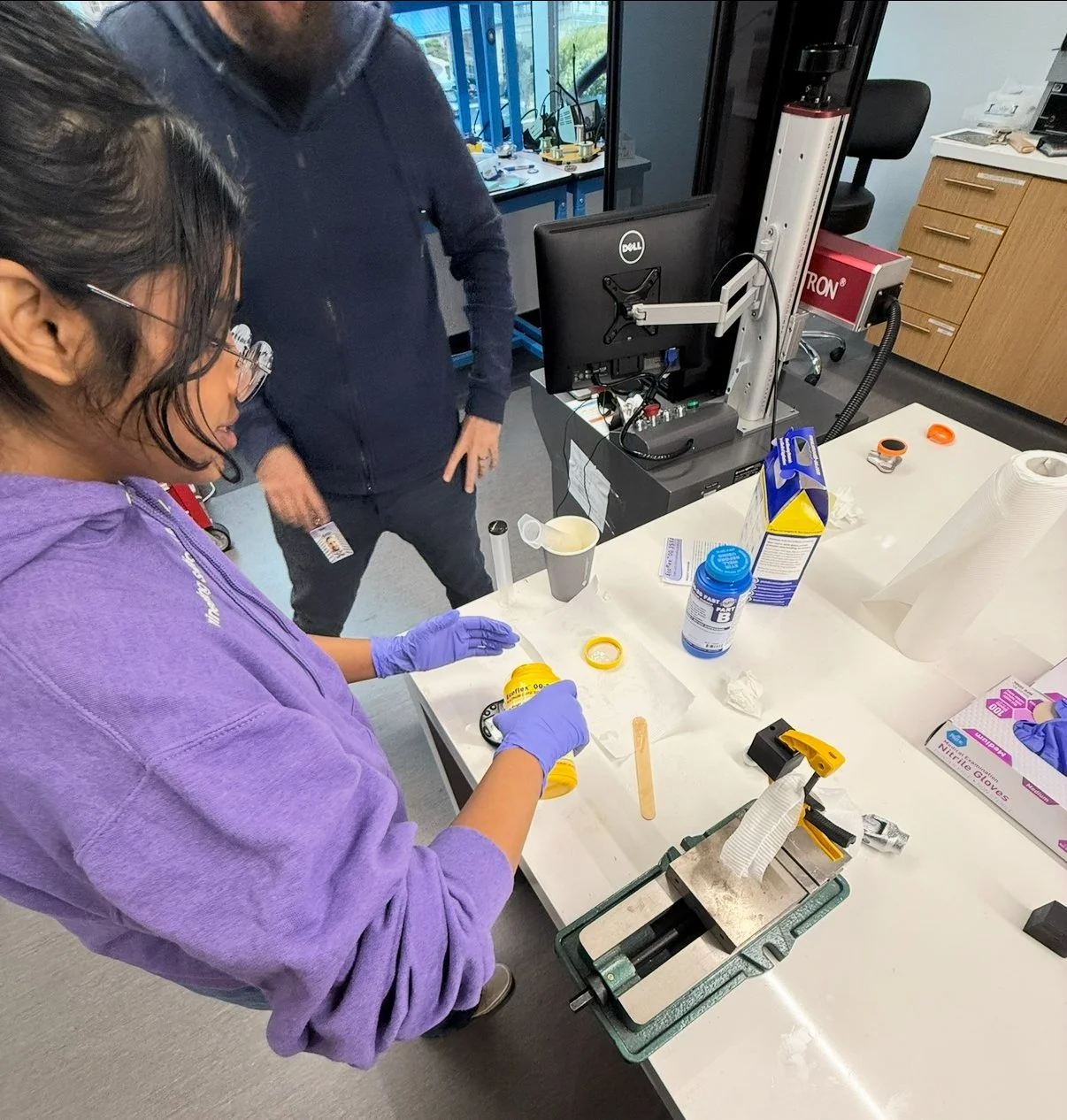
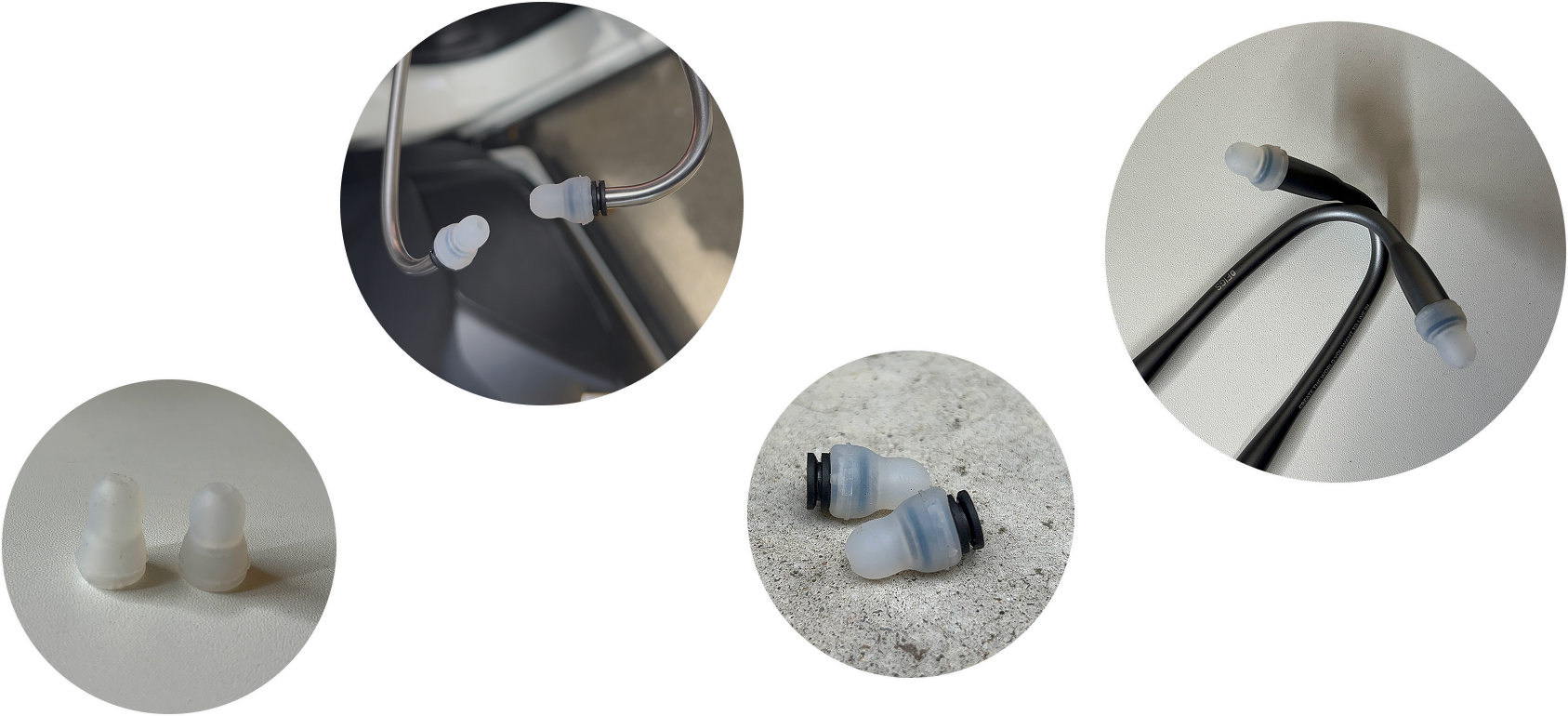
using TC-5150 A/B Translucent Silicone Rubber (vulcanized, a strain hardening technique)
Criteria: Comfort, Fit, Manufacturability, Material Compatibility, Acoustic Seal, Aesthetics



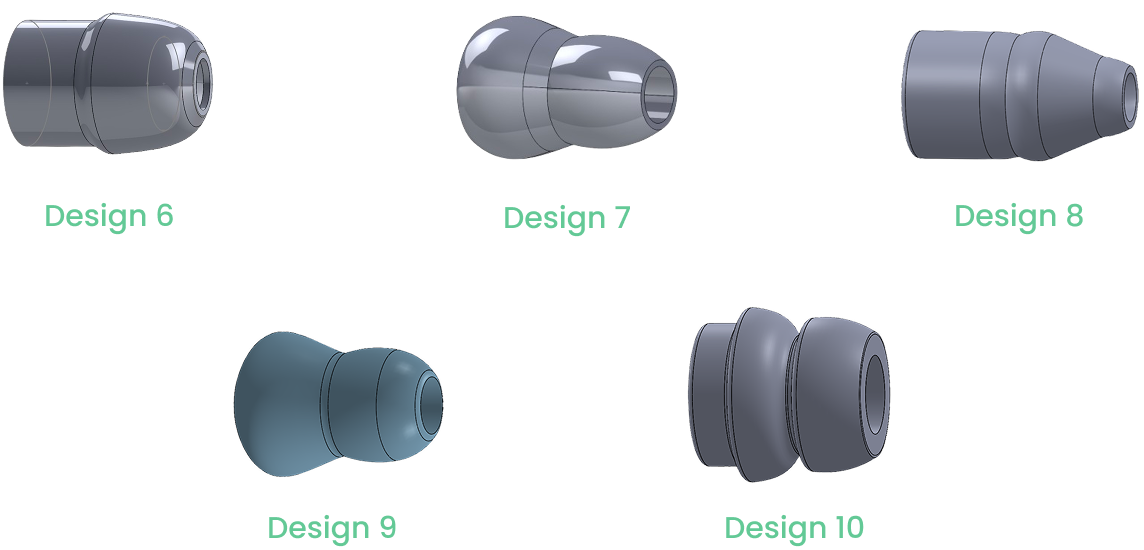
Team Designs: Iteration 2
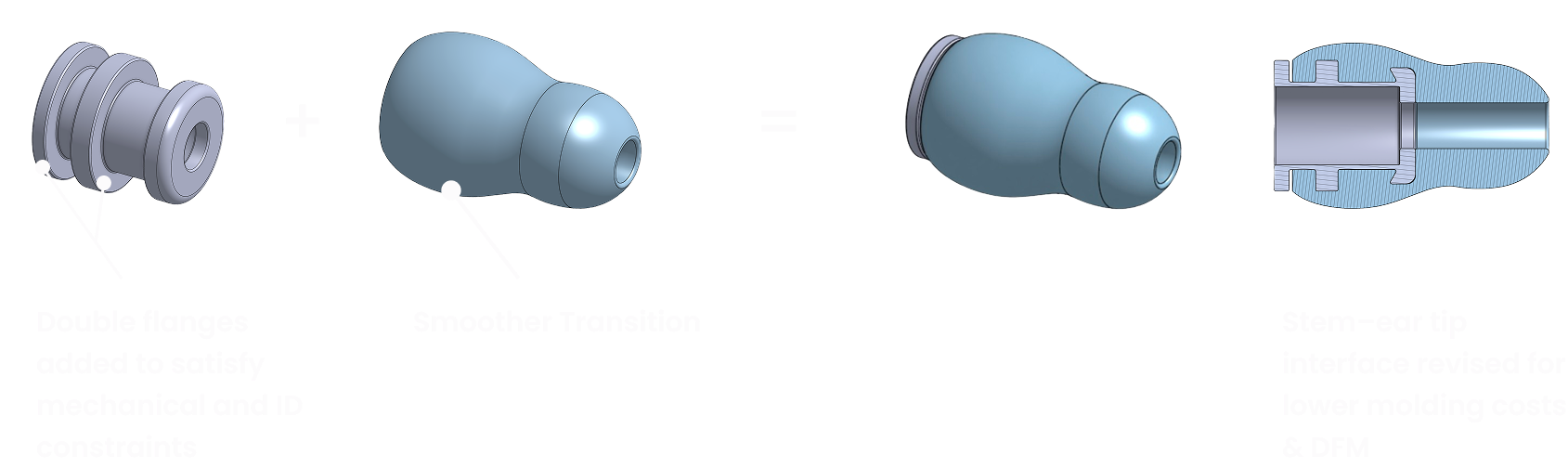
Team Design: Iteration 3
Testing: Sensitivity from Bode Plots
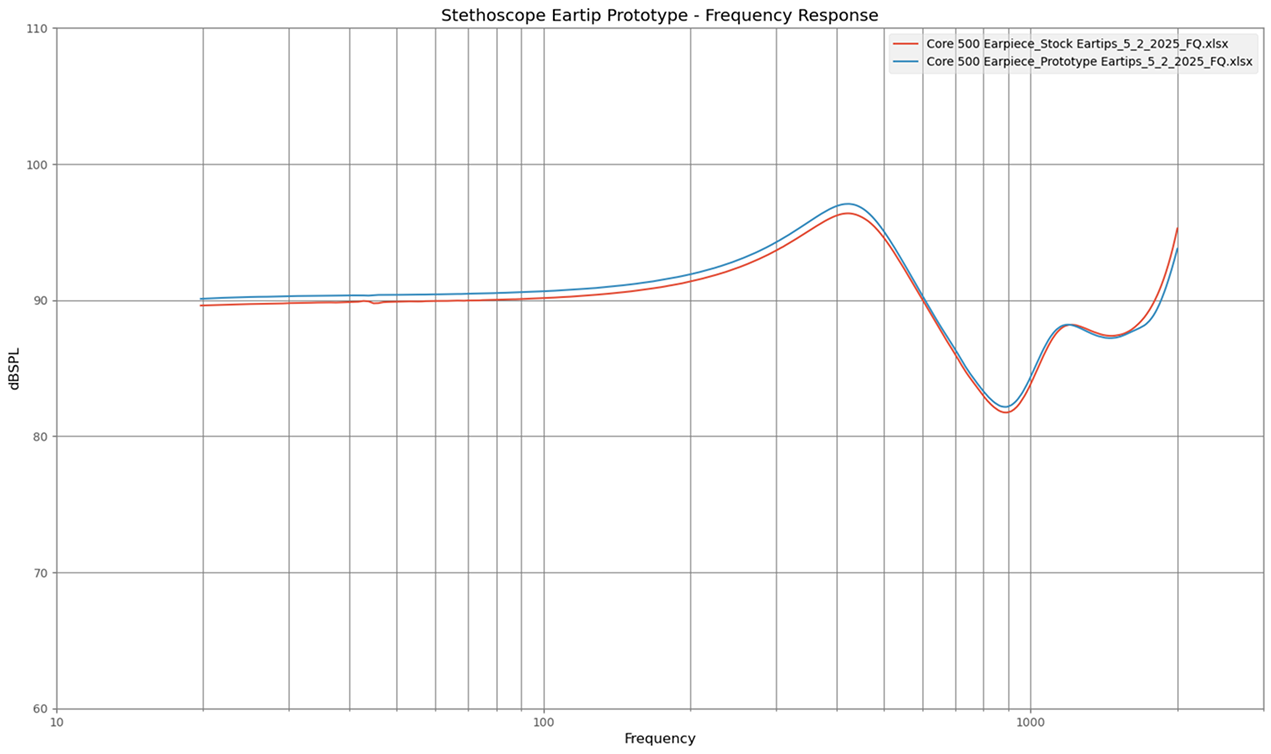
Acoustic Seal Frequency Response
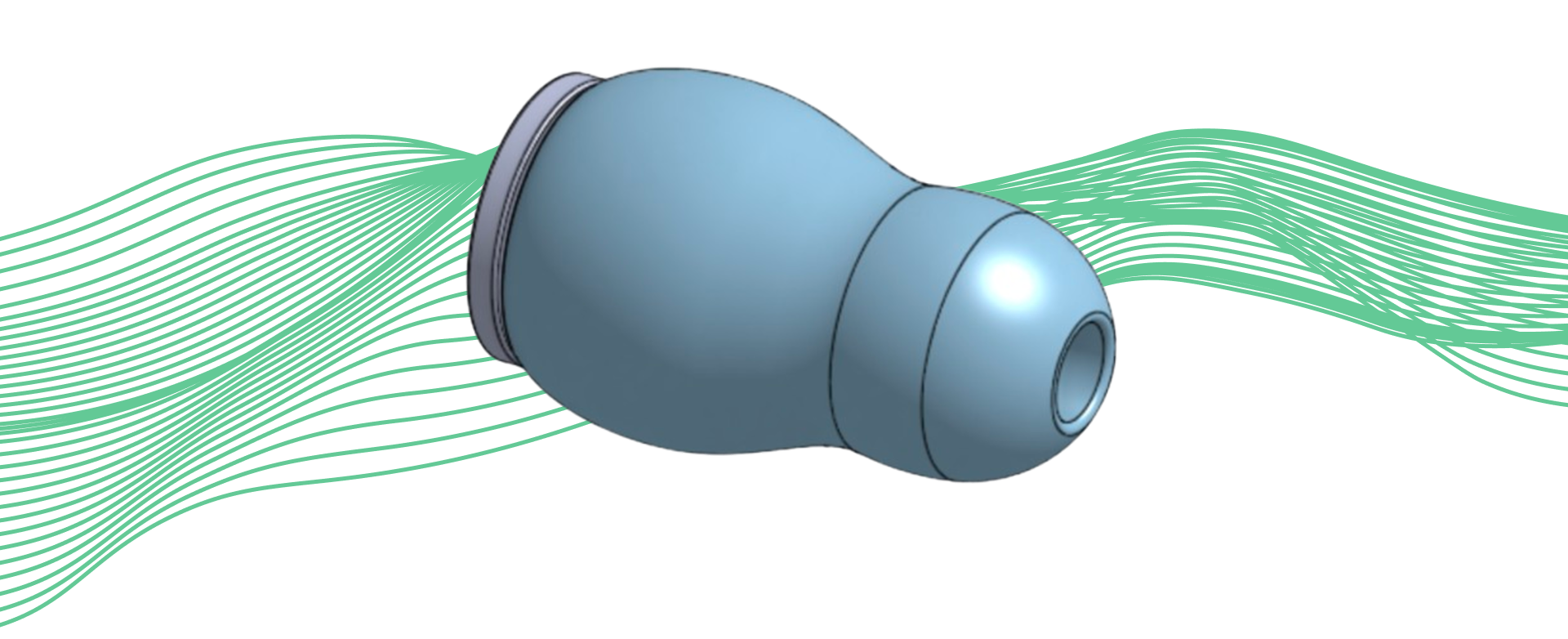
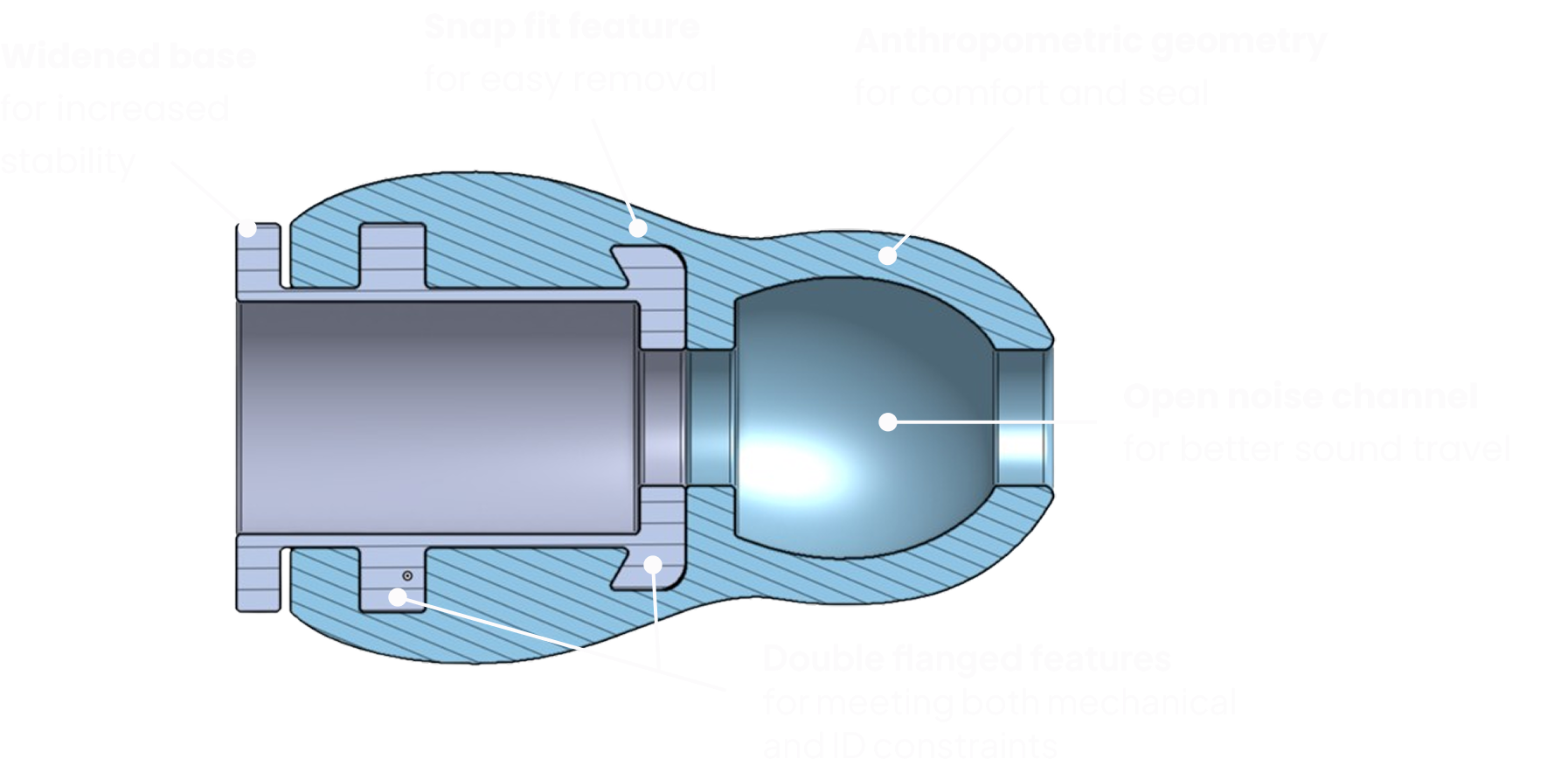
Final Design

Limitations
The cost required to manufacture our design with the final material prohibited us from creating a prototype similar to the original ear tip
Asynchronous work made it challenging to receive molds and prototype with quick turnaround.
Access to 3D models of ear anatomy would have allowed us to ensure better geometry to enable more effective sealing.
Key Takeaways
When designing a product in a competitive market, aesthetics and Industrial Design becomes a need rather than a luxury in design
Anthropometric measurements are good design criteria, however after testing, further adjustments will be needed due to subjectivity.
Understanding how a single design element interacts with other components is essential to ensuring a cohesive and functional product.